
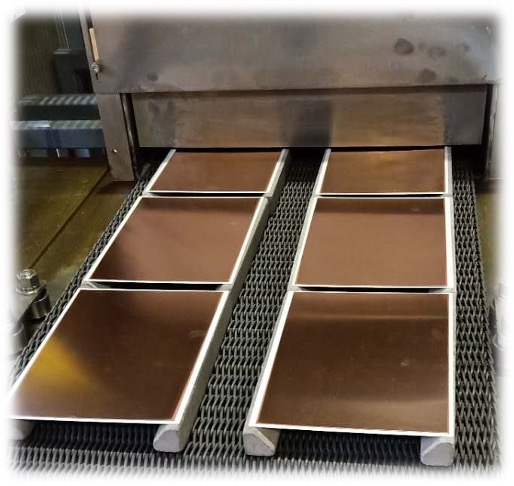
Direct Bond Copper (DBC) technology, which involves bonding copper foil directly to ceramic substrates, has been widely adopted for various microelectronic applications. It utilizes copper foil instead of pastes or expensive sputtered metallization, providing excellent electrical and thermal properties. Initially designed for high-power circuits, advancements in the DBC process have expanded its applications to fine-line and high-frequency circuits.
The DBC process involves using oxidized copper foil, such as oxygen-free or tough-pitch copper, which is placed on an oxide ceramic substrate like alumina or beryllium oxide. The foil and substrate are then subjected to high temperatures in a specialized belt furnace with a controlled thermal profile. The elevated temperature causes the copper oxide to form a liquidus cuprous oxide matrix, chemically bonding to the ceramic surface. The resulting bond exhibits exceptional strength, exceeding 24,000 PSI sometimes, particularly with alumina and beryllium oxide surfaces.
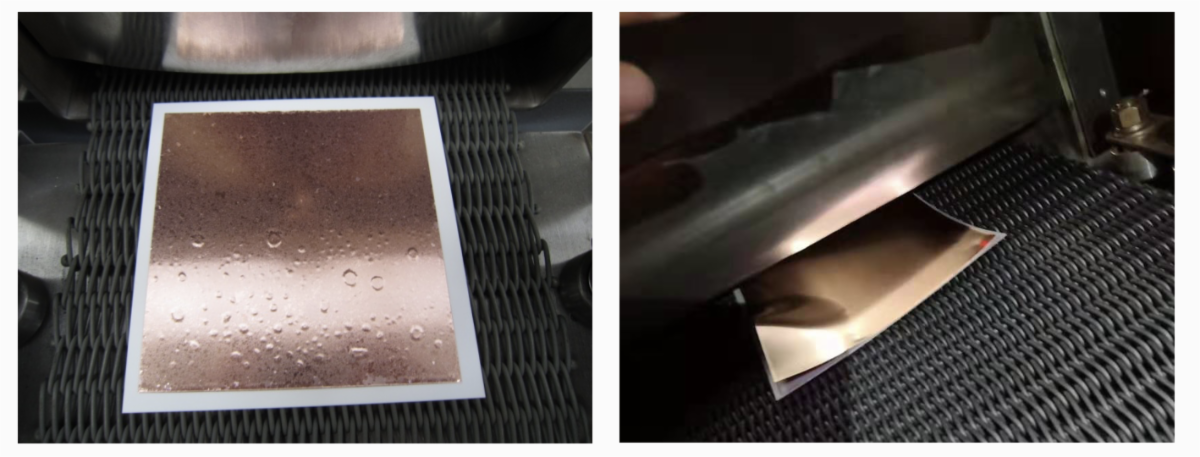
However, how does the blistering form during the process?
During the bonding process, excess gas is released as the cupric oxide on the copper surface converts to cuprous oxide. To prevent gas entrapment and the formation of blisters, the copper foil is often pre-etched with parallel grooves. These grooves facilitate gas dissipation but can lead to other challenges like chemical entrapment, ceramic staining, and undercutting in fine-line circuits. Modern techniques aim to control oxide thickness, eliminating the need for grooves and addressing these issues.
Thorough Surface Cleaning and proper surface activation can also reduce the amount of blistering being formed: Implement a rigorous cleaning process to ensure the removal of any contaminants or debris from both the copper and ceramic surfaces before bonding. Use appropriate surface activation techniques, such as plasma cleaning or chemical treatments, to promote strong bonding and minimize bubble formation.
Even temperature distribution: Inconsistent temperature distribution within the furnace can result in inconsistent bonding quality of DBC products. Uneven temperature can lead to overheating in some areas and insufficient temperature in others, affecting the stability and consistency of the bonding process. This can result in variations in bonding strength and potential cracks and damage due to thermal stress.
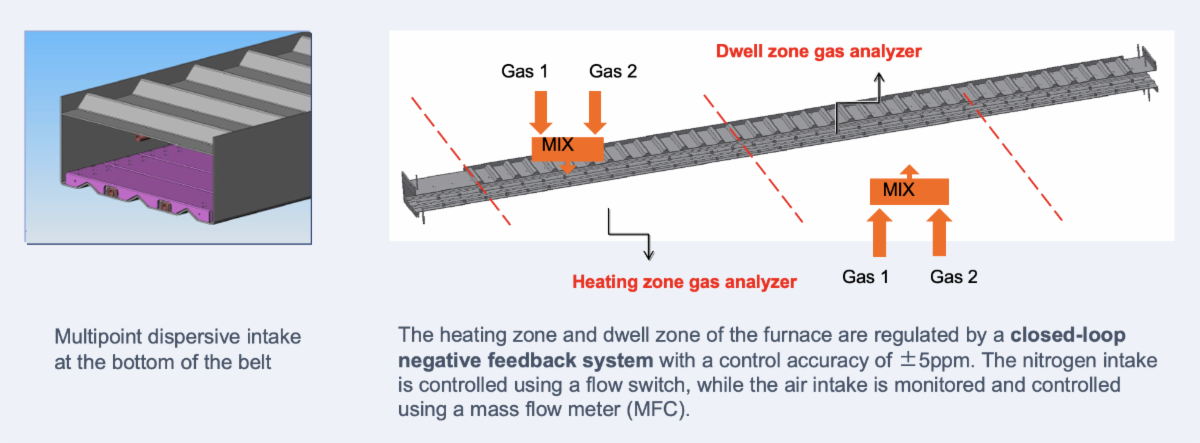
Stable atmosphere control and oxygen activity: DBC bonding depends on a controlled copper/oxygen system. The required oxygen activity and thermal profile depend on the copper surface condition, ceramic substrate and validated bonding process. Excessive or insufficient oxidation can affect bonding. Establish and monitor the process-specific atmosphere rather than treating a universal low-oxygen value as the DBC target.
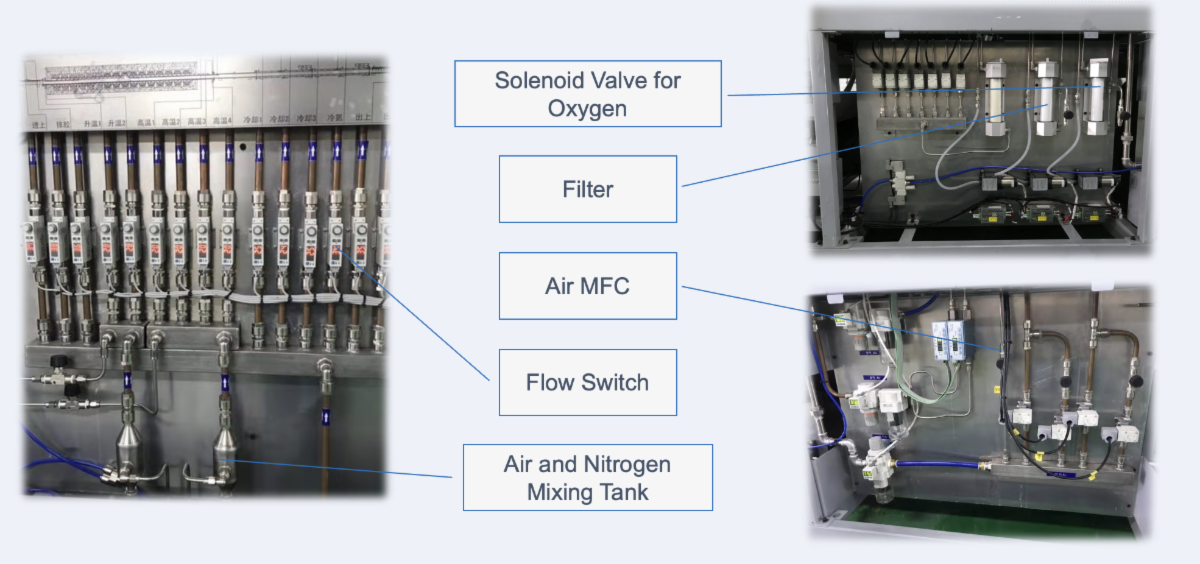
Fortunately, the use of a quality-designed belt furnace can effectively address the challenges of uneven temperature distribution and unstable atmosphere control in DBC production:
A belt furnace for DBC production should be evaluated against the required product temperature profile, cross-belt uniformity, loading and atmosphere-control conditions. Specify the oxygen-control range, measurement location and method for the selected bonding process. Low-oxygen capability for another nitrogen-atmosphere application is not a universal DBC operating target. Temperature uniformity and control performance must be confirmed for the proposed furnace configuration and operating conditions.
Torrey Hills is now your one-stop destination for all LTCC equipment needs, including 20 um line. Contact us today!